
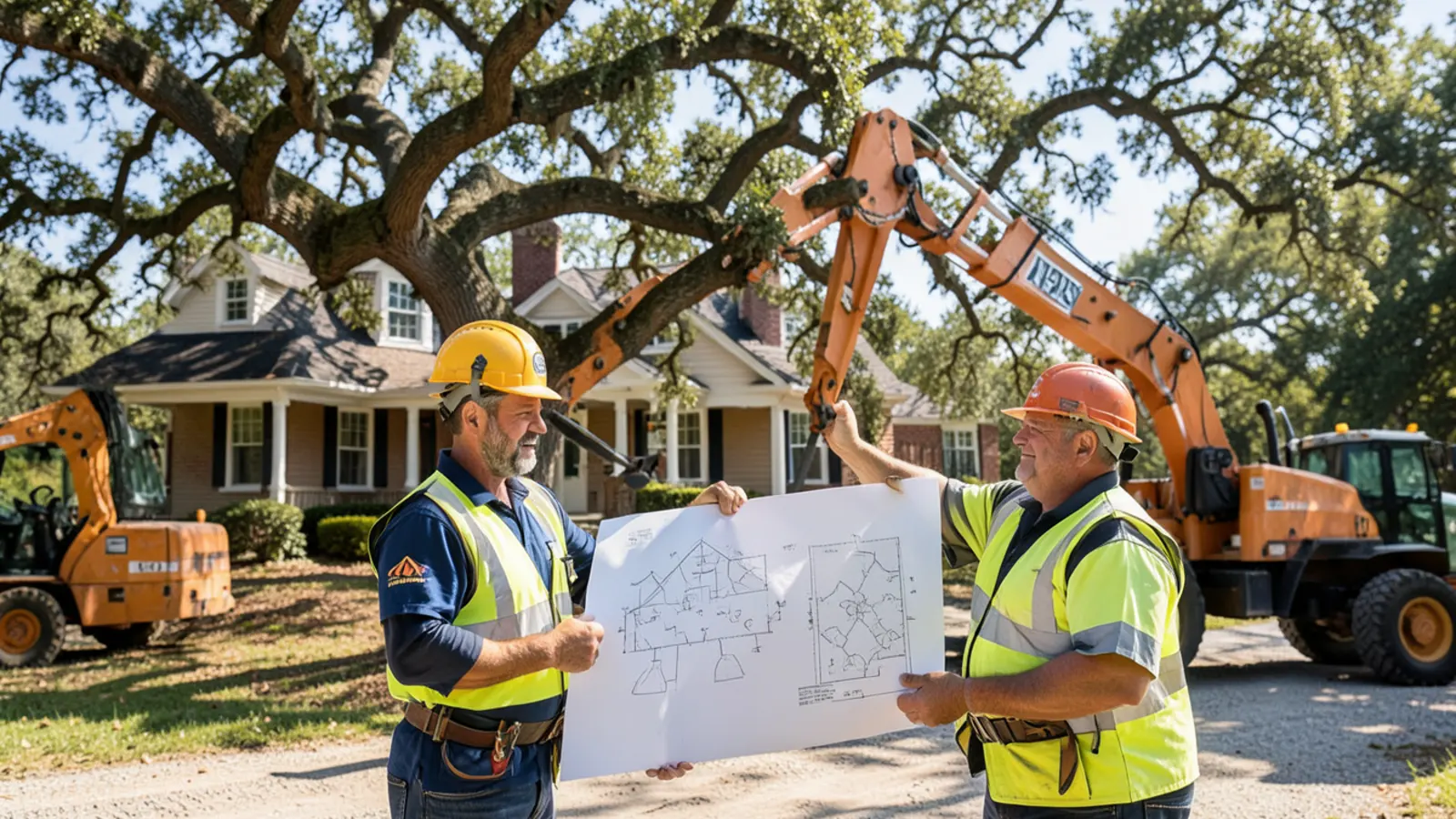
What Newnan and Peachtree City homeowners need to know about tree ordinances
Understand local tree removal ordinances in Newnan and Peachtree City, including Newnan's 8-inch DBH contractor rule, owner-occupied exemptions, and HOA greenbelt standards.
The City of Newnan Tree Ordinance & the 8-Inch DBH Rule
Before scheduling a tree removal crew, Newnan homeowners should understand municipal canopy protection guidelines. The City of Newnan maintains a tree preservation ordinance designed to protect urban forestry and prevent unpermitted commercial clear-cutting along developing thoroughfares such as Bullsboro Drive, Highway 34 East, and Highway 16.
Under Newnan's local guidelines, tree removal performed by a contractor for a fee generally requires a municipal tree removal permit when the tree measures 8 inches or greater in Diameter at Breast Height (DBH). This rule applies primarily to commercial sites, residential development tracts, multi-family complexes, and newly subdivided parcels.
The intent of the ordinance is to safeguard the city's historic canopy and prevent unpermitted commercial land clearing while maintaining reasonable flexibility for homeowners facing legitimate tree hazards.
The ordinance establishes tree density unit requirements for newly developed subdivisions and commercial tracts, ensuring that mature shade canopies are replenished when site preparation requires significant tree removal. Commercial sites must maintain minimum tree density units per acre through preservation or replanting approved native species such as southern red oaks, swamp white oaks, or trident red maples.
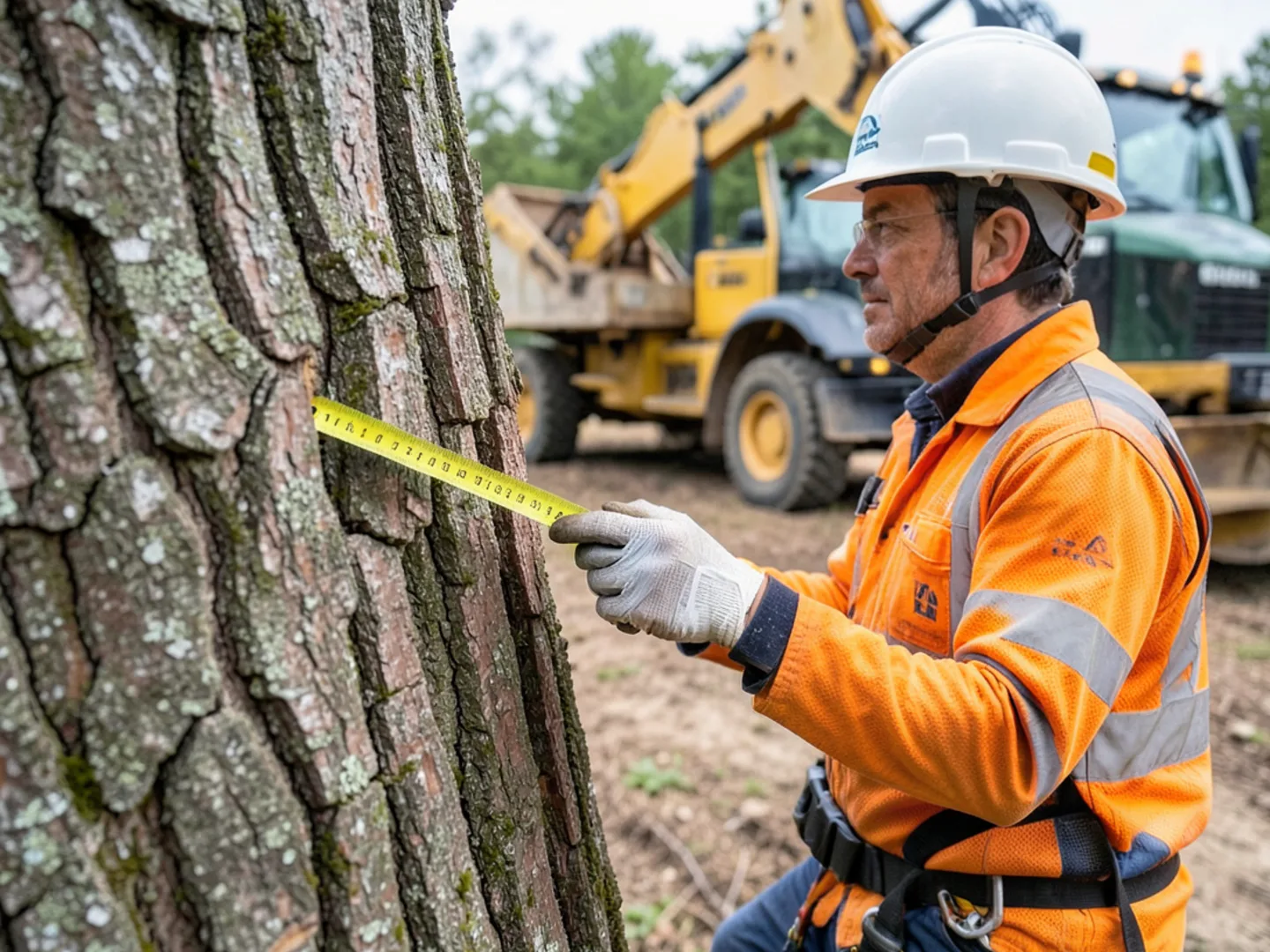
Measuring 4.5 feet above ground determines if a tree meets Newnan's 8-inch DBH permit rule
Owner-Occupied Exemptions vs. Commercial & Development Mandates
For typical single-family homeowners, the ordinance provides practical exemptions. In existing owner-occupied single-family residential districts, trees that are dead, severely diseased, structurally hazardous, or causing direct damage to building foundations, driveways, or underground utility lines are exempt from mandatory permit fees.
However, documentation is vital. Should a city code compliance officer inquire about a tree removal in an established Newnan neighborhood, having photographic evidence or an arborist assessment proving the tree was dead or hazardous protects the homeowner from administrative citations.
Commercial properties, apartment communities, and builders clearing raw acreage do not qualify for homeowner exemptions and must submit formal tree conservation and replacement plans.
In addition, trees growing directly within foundation easements, structural clear zones, or threatening subterranean septic drain fields qualify for straightforward administrative removal clearance.
- Document Visible Decay: Take dated photographs showing trunk cavities, mushroom conks, or cracked soil around the root flare
- Retain an Itemized Arborist Quote: Keep a written estimate describing specific biological defects and hazard targets
- Check Subdivision Covenants: Verify whether your specific HOA neighborhood requires private architectural committee approval
- Identify Underground Utilities: Always have underground utility lines located by Georgia 811 before stump grinding commences
Peachtree City enforces strict greenbelt and HOA rules governing buffer tree removal
Get immediate advice and transparent pricing from our Newnan tree specialists.
Permit & Approval Requirements: Newnan vs Peachtree City vs Coweta
Jurisdictional rules vary dramatically across the south-west Atlanta metro. Review this comparison table before planning your project.
| Jurisdiction | Permit Trigger | Homeowner Exemption | HOA Approval Required? |
|---|---|---|---|
| City of Newnan | Contractor tree removal >=8 inches DBH | Exempt if dead, hazardous, or damaging foundation | Only if HOA bylaws specify |
| Peachtree City | Any tree in designated greenbelt buffer | Requires formal city verification of hazard | Yes, mandatory village ARB review |
| Unincorporated Coweta | Commercial land disturbance >1 acre | No residential permit required on private lots | Only in master-planned subdivisions |
| City of Senoia | Historic commercial district canopy | Standard residential hazardous tree exemptions | Subject to specific neighborhood covenants |
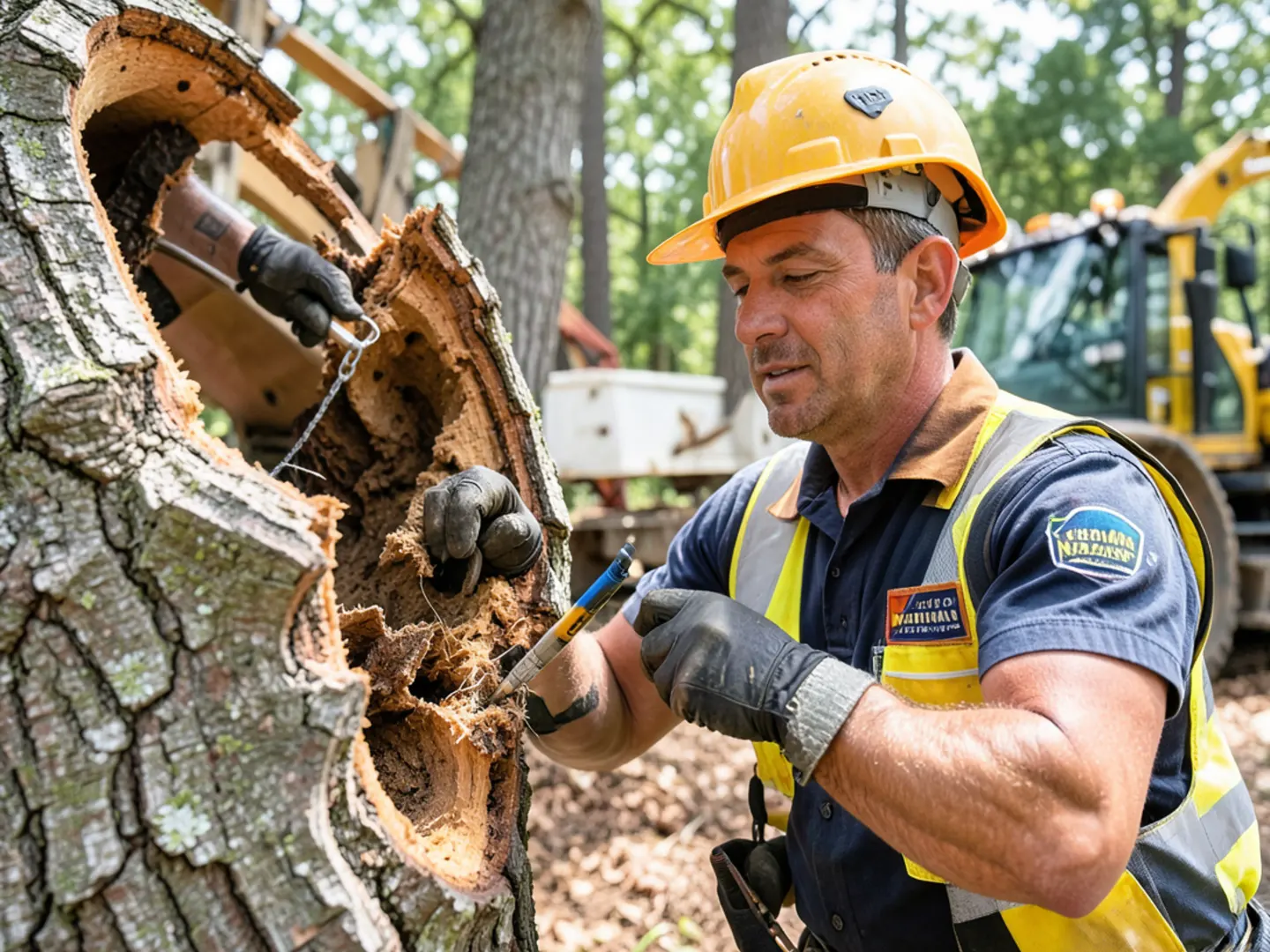
We assist property owners with municipal documentation and permit filings
Peachtree City Greenbelt Buffer Rules & Village HOA Approvals
Just 13 miles east of Newnan, Peachtree City enforces a completely distinct set of tree regulations. Peachtree City's master plan mandates preservation of 50- to 100-foot greenbelt buffer zones between residential lots, multi-use cart paths, and arterial roads.
Within city limits, removing any living tree within a designated greenbelt buffer requires formal municipal approval from the Peachtree City Planning and Zoning Department. Furthermore, village HOAs (such as Braelinn, Kedron, Wilksmoor, and Aberdeen) require homeowners to submit an architectural review form documenting dead or hazardous tree status prior to removal. Failure to obtain HOA approval can result in substantial community fines.
Our arborists provide photographic documentation of fungal decay, root heaving, or split crotches that homeowners can submit directly to their HOA architectural review board for prompt approval.
In greenbelt areas bordering Lake Peachtree and Lake Kedron, property owners must also ensure that tree work does not encroach on designated municipal riparian buffer conservation zones.
Historic District Review Guidelines in Downtown Newnan
For properties situated within the City of Newnan's designated Historic Overlay Districts—including the Greenville-LaGrange historic district, Platinum Point, College-Temple, and Cole-Town districts—additional review protocols may apply for specimen hardwoods.
While emergency removal of actively failing trees threatening structures is always prioritized for public safety, scheduled removals of landmark shade trees over 30 inches DBH may be reviewed by the local historic preservation commission. We assist homeowners with proper arboricultural documentation proving severe internal decay, hollow trunk cavities, or irreversible structural decline.
Historic district guidelines prioritize canopy preservation through structural deadwooding, crown thinning, and supplemental cabling whenever biological conditions allow.
Preserving the stately southern magnolias, century-old water oaks, and grand pecan trees that define Newnan's 'City of Homes' heritage is a shared community priority whenever trees can be safely managed.
Penalties for Illegal Tree Removal and Unpermitted Clear-Cutting
Municipalities across metro Atlanta have significantly increased enforcement regarding unauthorized tree removal and speculative lot clearing. In Newnan and Peachtree City, removing protected canopy trees or encroaching into mandatory greenbelt buffers without permits can trigger stop-work orders, municipal court citations, and substantial financial fines.
Fines are frequently assessed per tree or calculated based on the total trunk diameter removed. For example, unpermitted commercial removal of a 24-inch hardwood can incur replacement mitigation costs running into thousands of dollars.
Working with an experienced local tree service like Honey Bear Tree Service protects property owners from compliance violations. We verify local zoning requirements, confirm utility locates via Georgia 811 before stump grinding, and supply certified documentation of tree hazard status.
How to Measure Diameter at Breast Height (DBH) Correctly
Understanding whether your tree falls under municipal permit thresholds requires measuring DBH accurately. DBH is the standard forestry metric defined as the trunk diameter measured at 4.5 feet above the natural ground surface.
To measure DBH: use a standard flexible tape measure around the circumference of the trunk at 4.5 feet. Divide the circumference in inches by 3.14 (pi) to calculate the trunk diameter. For example, a trunk circumference of 26 inches yields a DBH of approximately 8.3 inches, placing it within Newnan's 8-inch threshold.
If the tree forks below 4.5 feet, measure each stem independently or measure the narrowest point of the trunk immediately below the fork union. For trees growing on steep slopes, measure 4.5 feet from the high side of the ground.
Working With a Contractor to File Tree Removal Applications
Navigating municipal paperwork should not be a hassle for property owners. When you hire Honey Bear Tree Service, our team inspects your property, determines whether your tree meets exemption criteria, and coordinates any necessary municipal filings on your behalf before work begins.
We handle the technical details, ground protection, and precision removal from start to finish. Call (321) 677-9055 to speak with our Newnan team about your local tree project.
Frequently Asked Questions About This Topic
DBH stands for Diameter at Breast Height, which is measured around the trunk at 4.5 feet above the natural ground line. An 8-inch diameter corresponds to a trunk circumference of approximately 25.1 inches. Under Newnan's tree preservation guidelines, contractor-assisted removals of trees at or above this caliper trigger municipal review unless the tree meets explicit homeowner hazard exemptions.