
Does your Georgia homeowners policy cover tree removal? Here are the rules
Learn when Georgia homeowners insurance covers fallen tree removal, how policy deductibles apply to debris hauling, and what happens when a neighbor's tree falls on your property.
The Structural Damage Rule: Structure vs. Open Yard Trees
Following severe storm events across West Georgia, one of the most common questions homeowners ask is: 'Will my homeowners insurance pay to remove this fallen tree?' The answer under standard Georgia HO-3 homeowner policies hinges almost entirely on one legal distinction: did the tree cause physical damage to an insured structure?
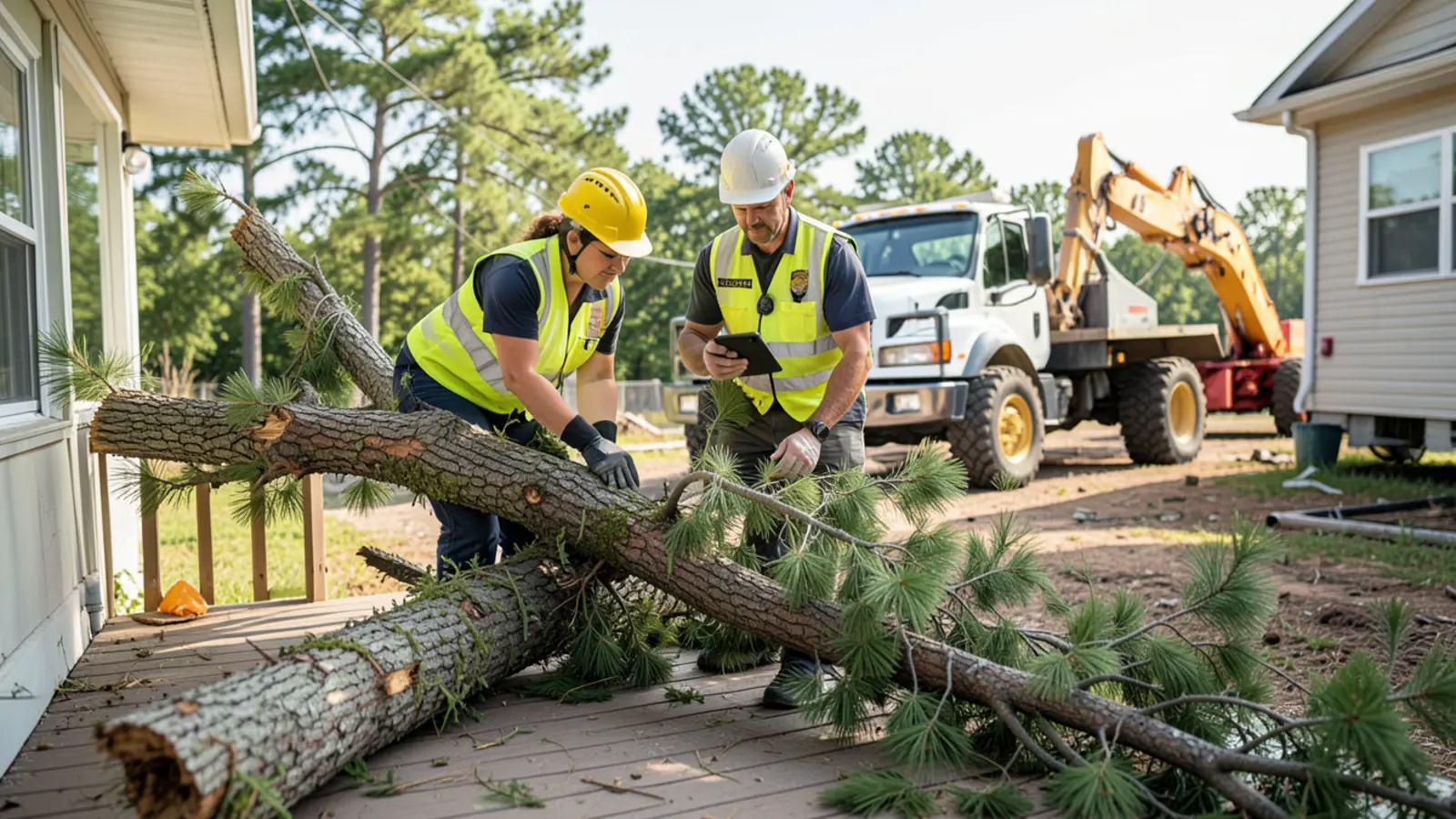
If a storm-blown oak or pine falls onto your home, attached garage, detached workshop, deck, or perimeter fence, your policy's dwelling or other structures coverage almost universally covers the cost of lifting the tree off the structure, repairing the structural damage, and removing the debris. However, if that same tree falls harmlessly in your open lawn without striking an insured structure, most insurance policies provide zero coverage for removal, classifying it as routine yard maintenance.
An important exception applies to access obstructions: many policies will cover removal costs if a fallen tree blocks your primary driveway, preventing vehicle ingress, or blocks an entrance handicap ramp, even if no building structure was punctured.
In Coweta, Fayette, and Carroll counties, where mature loblolly pines frequently exceed 80 feet in height, a falling tree rarely leaves a clean boundary. If a portion of the tree rests on your roof while the root ball remains on a neighbor's property, insurance covers the extraction and cutting of the timber that is actively touching or threatening your insured dwelling. Our team coordinates directly with adjusters to ensure every necessary saw cut and crane pick is fully justified and approved under your dwelling coverage.
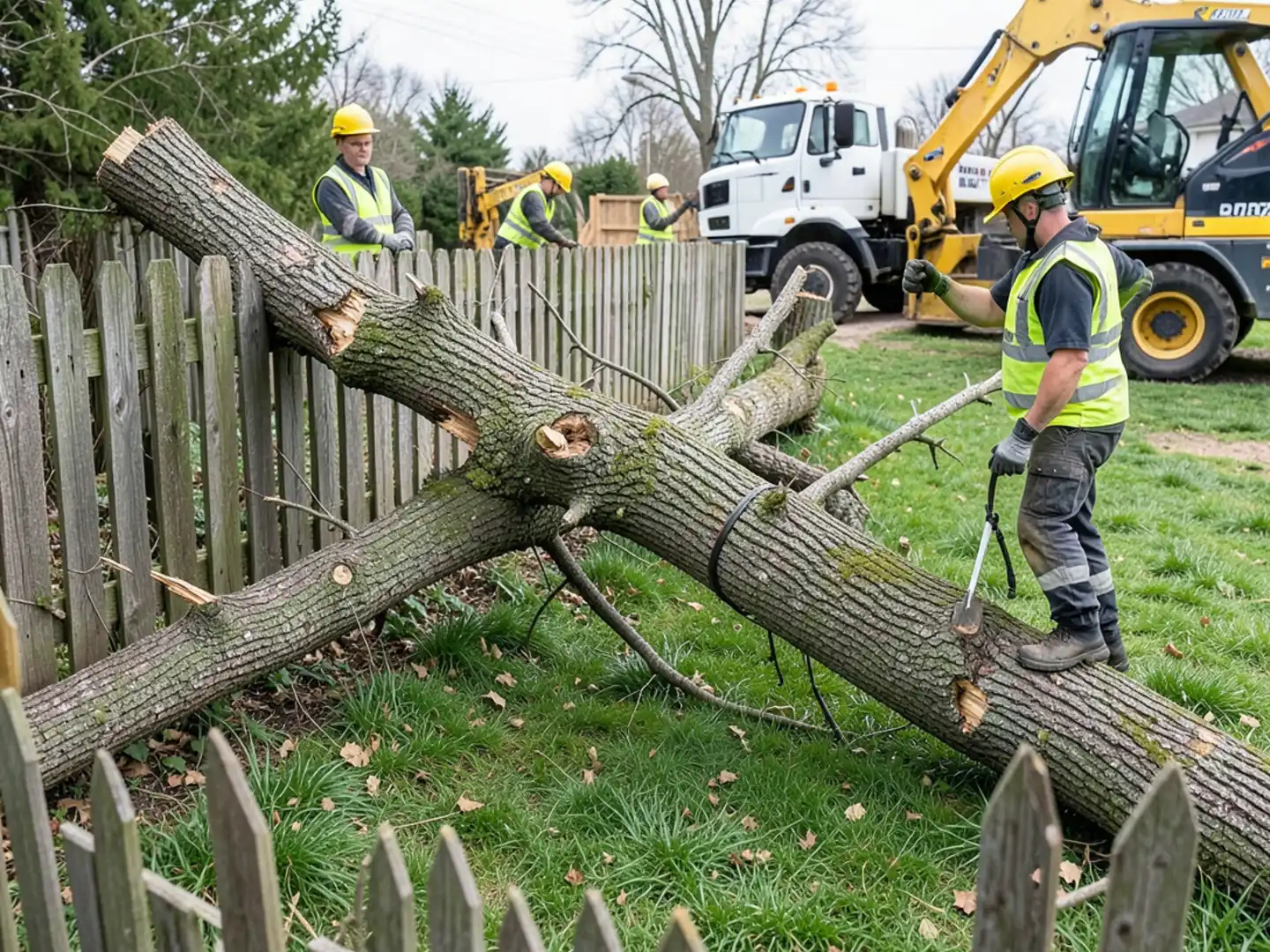
Take comprehensive photos before anything is moved to validate your claim
Neighbor's Tree on Your Property: Who Is Liable in Georgia?
Property line tree disputes are exceptionally common after severe weather. If your neighbor's tree falls onto your house or driveway during a storm, whose insurance pays?
Under established Georgia common law, a storm-induced tree failure is legally considered an 'Act of God.' Unless your neighbor had prior written notice (such as a certified arborist letter or registered mail) that their tree was demonstrably dead or hazardous before the storm, the neighbor is not legally liable for the damage. Under Georgia law, you must file the claim with your own insurance company, which will pay for damage to your structure subject to your standard deductible.
If your insurer believes the neighbor was negligent because visible rot was obvious, your insurer's subrogation department may attempt to recover your deductible from the neighbor's insurer after paying your claim.
Georgia Tree Law Principle
In Georgia, where a tree falls dictates who pays. If a neighbor's tree falls onto your roof during a storm, your homeowners policy covers your house. Your neighbor's policy is only liable if you can prove prior written notice of negligence.
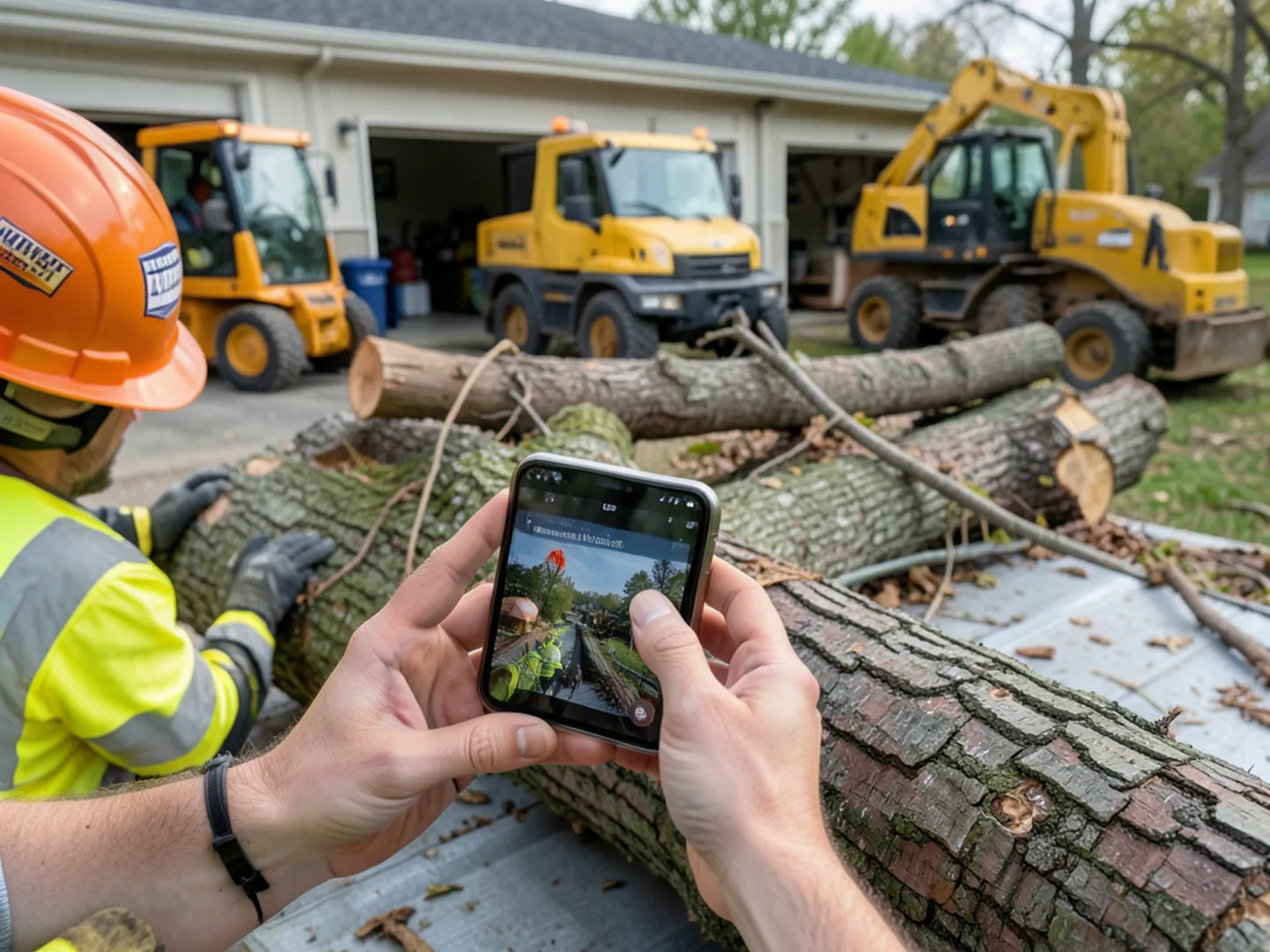
Under Georgia law, your insurer typically covers trees hitting your structures regardless of who owns the trunk
Get immediate advice and transparent pricing from our Newnan tree specialists.
Insurance Coverage Breakdown: Structure vs Yard Trees
Understanding how typical Georgia homeowners policies classify various fallen tree scenarios helps you anticipate claim approvals and manage out-of-pocket costs.
| Fallen Tree Scenario | Insurance Coverage Status | Applicable Policy Section |
|---|---|---|
| Tree falls on roof / punctured trusses | Fully covered (removal + roof repair) | Dwelling (Coverage A) minus deductible |
| Tree crushes perimeter fence or detached shed | Covered up to structure limit | Other Structures (Coverage B) minus deductible |
| Tree blocks primary residential driveway | Covered for removal up to sub-limit | Additional Living / Debris Sub-limit ($500–$1,000) |
| Tree falls in open lawn / zero damage | Not covered (routine yard maintenance) | Homeowner out-of-pocket responsibility |
| Neighbor's dead pine falls on your garage | Covered under your policy (unless written notice) | Your Dwelling (Coverage A) minus deductible |

Itemized receipts and emergency scopes ensure smooth claims processing
What Insurance Deductibles and Limits Apply to Debris Hauling?
Understanding how insurance companies break down tree claims saves significant frustration. Insurance policies typically divide a tree claim into two distinct operational phases:
1. Structural Extraction: The labor and heavy equipment required to safely rig, lift, and remove the tree off the damaged roof or structure. This is billed under Dwelling (Coverage A) or Other Structures (Coverage B) and is covered up to policy limits minus your deductible.
2. Debris Disposal: The process of cutting up the remaining log, chipping branches, and hauling the timber away from the property. Most Georgia policies carry a sub-limit for debris removal, typically capping payout between $500 and $1,000 per tree, with a maximum aggregate of $1,000 to $2,000 per storm event. Any excess debris hauling above this limit is the homeowner's out-of-pocket responsibility.
Navigating Adjuster Walkthroughs and Itemized Estimates
When the insurance adjuster visits your property, having an itemized written estimate from a professional tree service makes a massive difference in claim approval speed.
Adjusters look for specific line-item breakdowns: crane mobilization hours, saw labor hours, rigging equipment, and emergency roof tarping. If a tree company provides a vague single-number invoice like '$3,500 tree removal,' adjusters will frequently push back or delay payout.
Honey Bear Tree Service formats all insurance-claim estimates with detailed line items that conform to standard insurance estimating software (such as Xactimate), ensuring smooth approval without contentious disputes.
We can also meet your field adjuster directly on-site at your Coweta or Fayette County property. Walking the damage together allows our saw team to point out structural pinch points, hidden truss punctures, and unstable root flares that require specialized crane extraction.
Step-by-Step Insurance Documentation Protocol
To ensure your tree damage claim is approved quickly and paid in full, follow this proven 5-step documentation protocol:
- Photograph Everything Before Cleanup: Take wide, medium, and close-up photos of the tree resting on the structure from all safe angles
- Contact Your Claims Center Immediately: Report the loss, obtain a claim number, and request emergency mitigation authorization
- Hire a Professional Local Tree Service: Obtain a detailed, itemized written work order separating structural extraction from debris hauling
- Retain All Receipts and Emergency Invoices: Keep copies of tree removal receipts, emergency roof tarping invoices, and temporary lodging costs
- Request a Written Scope Confirmation: Ensure your insurance adjuster reviews the tree company's itemized scope before final settlement
Questions to Ask Your Claims Adjuster Before Signing Work Orders
Before authorizing emergency tree removal, contact your claims adjuster and ask these vital questions: 'What is my specific deductible for windstorm damage?', 'Is there a separate percentage hurricane deductible applicable to this storm?', and 'What is my policy's sub-limit for debris disposal versus structural extraction?'
Honey Bear Tree Service routinely coordinates with major insurance carriers including State Farm, Allstate, Travelers, USAA, and Liberty Mutual. We provide transparent, itemized invoices formatted specifically for adjuster approval.
If a neighbor's tree caused the damage, ask your adjuster whether your insurer will pursue subrogation against the neighbor's policy to recover your deductible. Under Georgia law, if documented evidence proves the tree was dead prior to the storm, your deductible may be reimbursed.
Call our Newnan office at (321) 677-9055 for prompt storm emergency dispatch and comprehensive insurance documentation assistance.
Frequently Asked Questions About This Topic
Generally, no. Under standard Georgia HO-3 homeowners insurance policies, if a tree falls harmlessly in an open yard without impacting an insured structure (like your home, fence, or garage), the insurance company does not pay for removal or debris hauling. The only common exception is if the fallen tree blocks your primary driveway, preventing vehicle access to your home.