
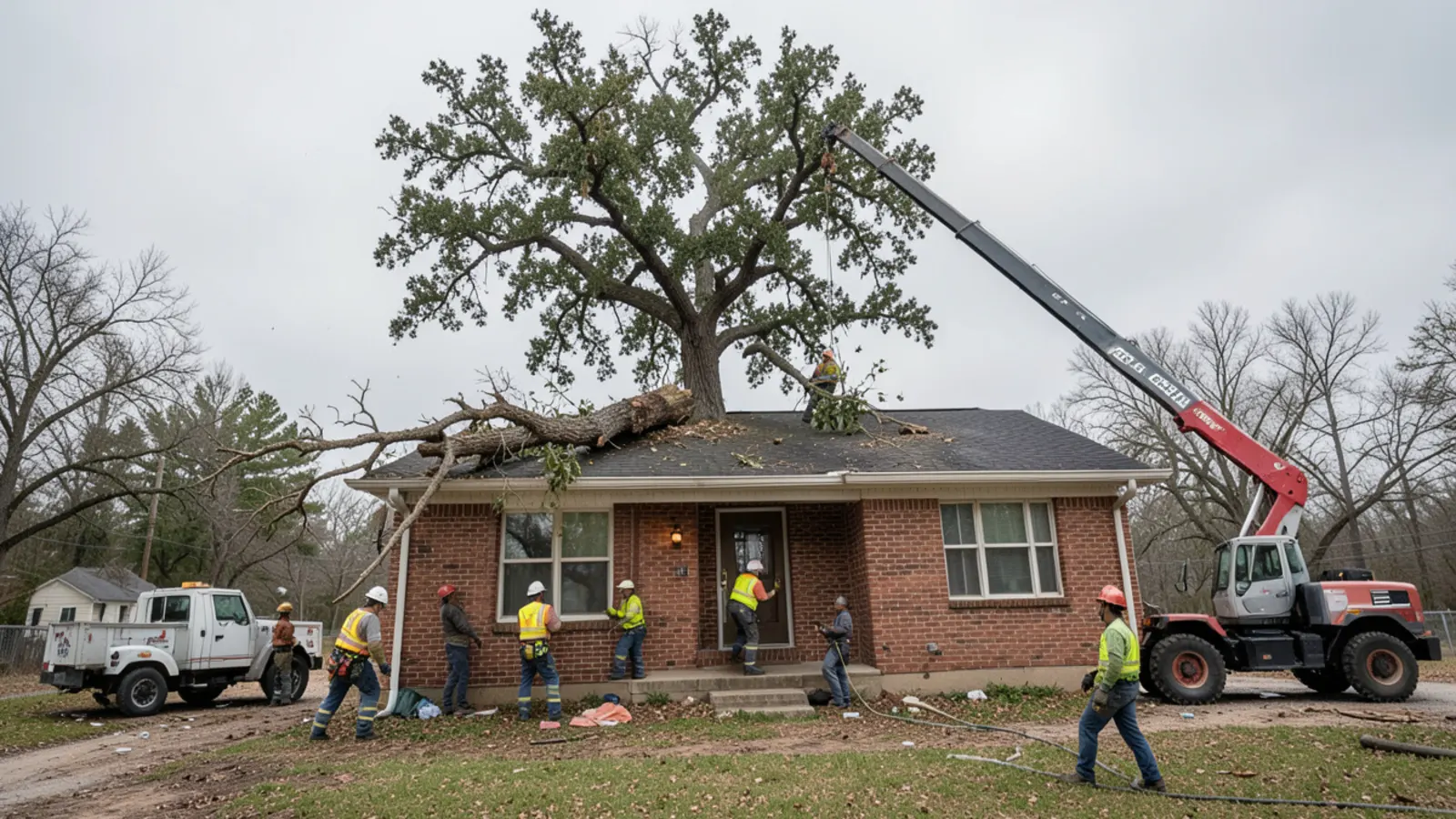
What to do first when severe storm winds drop a tree onto your roof
When severe storm winds crash a mature oak or pine into your home, taking the right immediate steps protects your family and ensures full insurance reimbursement.
Immediate Life-Safety Steps Before Inspecting Damage
Few sounds are as terrifying as a multi-ton oak or pine crashing into your roof in the middle of a torrential Georgia thunderstorm. Your immediate priority must be absolute life safety—not inspecting the damage, moving furniture, or attempting to climb into the attic.
First, evacuate all occupants and pets away from the section of the house where the tree made impact. Structural rafter beams, ceiling joists, and drywall under heavy mechanical load can suffer delayed collapse several minutes or hours after the initial strike as wood fibers slowly shear under tension. If the impact was violent or you hear continuous cracking timber, evacuate the home entirely and seek shelter in an unthreatened outbuilding, vehicle, or neighbor's house.
If water is pouring through punctured ceiling drywall near electrical fixtures or outlets, turn off your home's main electrical breaker only if the panel is in a completely dry, safe area. If accessing the breaker panel requires stepping through standing water, leave the home immediately and call the fire department.
Never send someone into the attic to push up drywall or inspect fractured rafters while several tons of tree trunk rest on the roof trusses above. Rafters under compressive load can snap violently with lethal explosive force.
- Evacuate everyone away from rooms beneath the impact zone immediately
- Listen for secondary creaking, groaning, or shifting structural rafters
- Account for all family members, children, and indoor pets
- Do not go into the attic under any circumstances while the tree rests on the roof
- Turn off main circuit breakers if water is pouring near electrical panels or ceiling fixtures
- Do not attempt to climb onto the roof to inspect the damage during wet or windy conditions
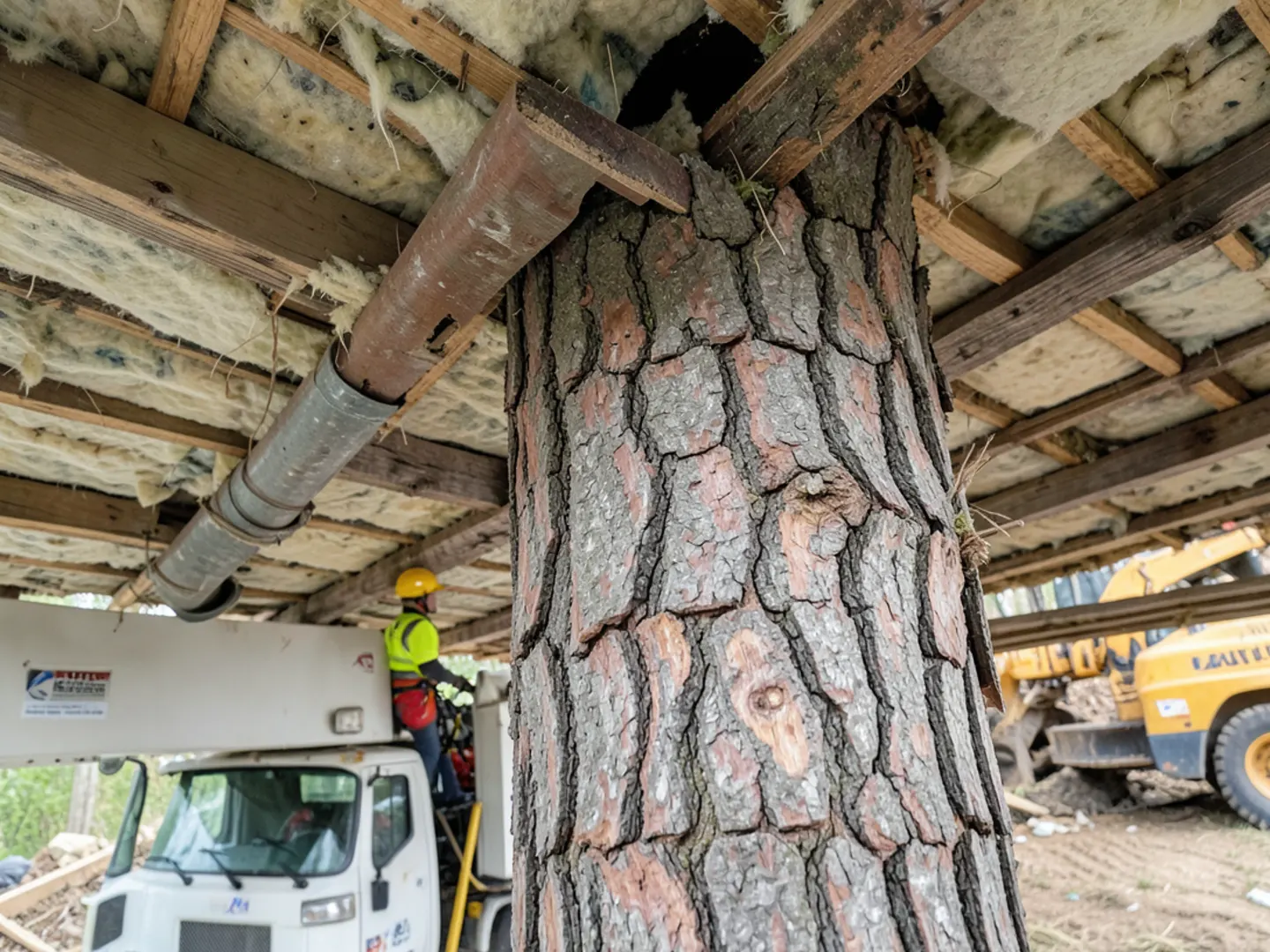
Photograph damage from multiple safe angles before anyone moves debris
Power Lines and Utility Hazards: When to Call the Power Company
When a tree falls onto a residential home in Newnan or surrounding Coweta County communities, it almost always tears down electrical service drops or contacts neighborhood distribution wires. Electricity can travel invisibly through wet tree bark, metal gutters, aluminum siding, and saturated red clay soil.
If any power line is touching the fallen tree or lying on the ground near your house, assume it is 100% energized and lethal. Keep everyone at least 35 feet away. Immediately call your local power provider—Georgia Power at 888-891-0938 or Coweta-Fayette EMC at 877-778-2226—as well as 911 if there is sparking or smoke.
Tree crews cannot legally or safely begin cutting wood until the electrical utility company physically arrives, de-energizes the service drop, and confirms the site is electrically safe. Professional tree services maintain direct coordination lines with utility emergency dispatchers to expedite site clearance.
If natural gas smells (mercaptan odor resembling rotten eggs) are detected, leave the property immediately on foot without operating light switches or cell phones, and call Atlanta Gas Light or 911 from a safe distance.
Critical Electrical Warning
Never assume a downed power line is dead because it isn't sparking or humming. Tree wood soaked with rain conducts high-voltage current directly into the ground and exterior home fixtures.
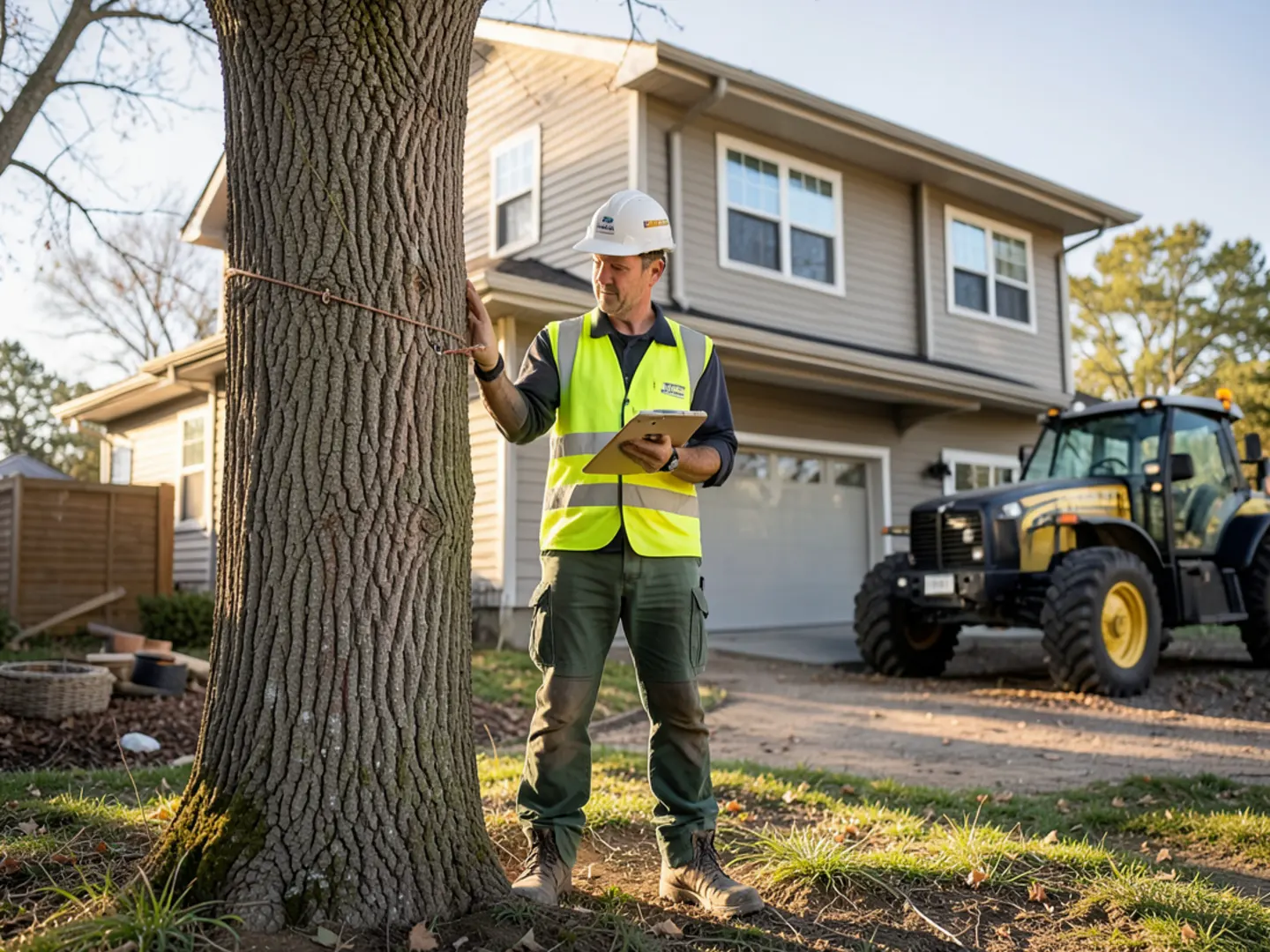
Always treat wires touching trees as energized emergencies for the utility company
Get immediate advice and transparent pricing from our Newnan tree specialists.
Photographing Structural Damage for Your Homeowners Insurance Claim
Once everyone is safe and utilities are verified, creating a comprehensive photographic record is the most important step you can take to ensure your insurance claim is approved without delay. Insurance adjusters require clear visual proof of the tree's original resting state before any branches are cut away.
From safe exterior vantage points on the ground, take 15 to 25 high-resolution photos and wide-angle video clips. Capture the entire tree from root plate to crown, the exact contact points where trunk or limbs puncture the roof decking, damaged fences, punctured gutters, broken windows, and debris fields.
Document interior water leaks as well. Take photos of sagging ceiling drywall, water dripping around light fixtures, and buckled flooring. Store all digital media in a dedicated folder labeled with the date, time, and storm event name.
- Take wide establishing shots showing the tree's original root location and trajectory into the home
- Capture close-up photos of crushed gutters, punctured roof shingles, and cracked siding
- Photograph damaged vehicles, broken fences, or air conditioner units struck by limbs
- Record interior ceiling cracks, sagging drywall, and water intrusion paths
- Record the date, approximate time of the storm event, and prevailing weather conditions
- Keep an organized digital folder containing all photos, claim numbers, and contractor receipts
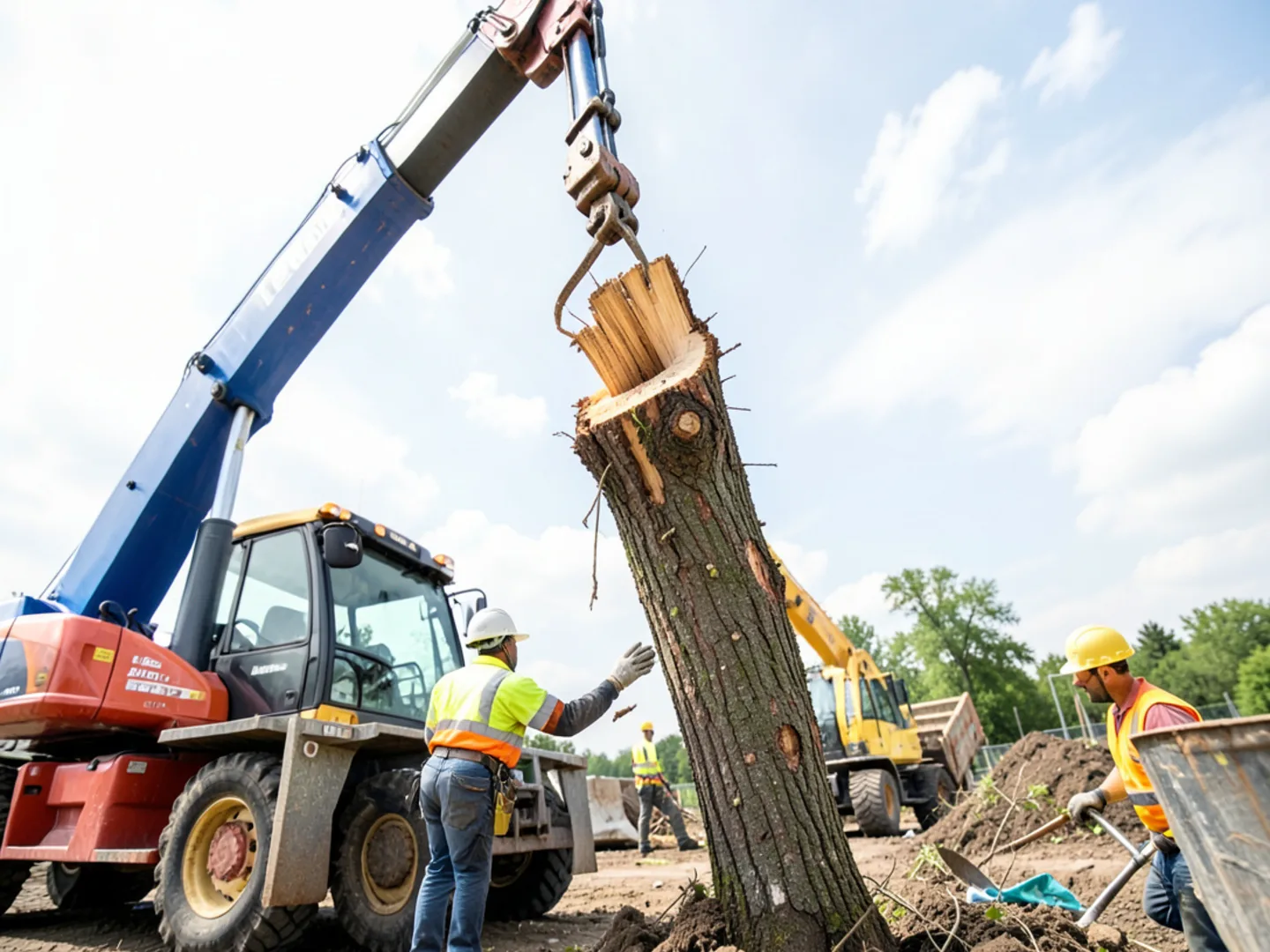
Precision crane lifts remove the structural load to allow emergency tarping
Emergency Storm Action Timeline (First 24 Hours)
Coordinating the first 24 hours after a tree impacts your home ensures that structural damage is minimized, your family remains sheltered, and your insurance carrier approves necessary emergency stabilization expenses without pushback.
| Timeframe | Priority Action | Responsible Party |
|---|---|---|
| 0 – 15 Min | Evacuate impact zone, account for pets, check for gas or electrical sparking | Homeowner |
| 15 – 45 Min | Call 911 if lines are down; call Georgia Power or Coweta-Fayette EMC | Homeowner / Utility |
| 1 – 2 Hours | Call Honey Bear Tree Service at (321) 677-9055 for 24/7 emergency dispatch | Homeowner / Tree Crew |
| 2 – 4 Hours | Contact homeowners insurance claim hotline to initiate file and claim number | Homeowner / Adjuster |
| 4 – 8 Hours | Crane extraction of fallen trunk from roof trusses and controlled branch lowering | Tree Service Crew |
| 8 – 24 Hours | Install heavy-duty weather tarps with furring strips over punctured decking | Tree Crew / Dry-in Team |
What Tree Crews Do Upon Arrival to Stabilize the Structure
When Honey Bear Tree Service arrives on site for an emergency tree call, our first action is stabilizing the load. A tree resting on a roof exists under immense stored mechanical tension. Carelessly severing branches can cause the heavy trunk to roll or drop deeper through ceiling joists.
Our crew utilizes hydraulic cranes or high-capacity rigging blocks anchored to stable adjacent trees. We take the weight of the trunk onto the crane cable before our saw operator makes the relief cut. The tree is lifted cleanly off your roof trusses and flown away into the drop zone, preventing any secondary puncture damage to your home.
Once the heavy weight is removed, our ground technicians process the wood through our commercial chipper, stage logs in an accessible area, and sweep away residual debris to allow roofing contractors immediate access.
Preventing Further Weather Intrusion After Tree Extraction
Once the tree is extracted from your roof, the exposed puncture hole leaves your attic and living space vulnerable to subsequent rainstorms. Immediate weatherproofing is required under your insurance policy's 'duty to mitigate damages' clause.
Honey Bear Tree Service can install heavy-duty reinforced weather tarps secured tightly with wooden furring strips over damaged rafters and punctured decking. This temporary dry-in barrier protects insulation, drywall, and hardwood floors from torrential water intrusion while you await your general contractor's permanent roof rebuild.
We also document all emergency tarping actions with before-and-after photos, providing itemized invoices that your insurance carrier reimburses under policy emergency mitigation provisions.
Choosing a Verified Local Tree Company vs Storm-Chasing Scammers
Following high-wind weather fronts and tornadic activity across Coweta and Fayette counties, out-of-state storm-chasing crews flood local neighborhoods offering fast verbal removal quotes. Property owners should exercise extreme caution.
Transient operators frequently lack proper commercial liability coverage and workers compensation. If an uninsured worker falls from your damaged roof, the property owner faces severe personal liability. Furthermore, storm chasers often demand large upfront cash payments and vanish after cutting a few branches, leaving heavy logs crushing the roof.
Always hire an established, locally rooted tree service with physical operational bases in Coweta County. Honey Bear Tree Service operates out of 65 Bullsboro Dr in Newnan, provides transparent written itemized proposals, and works directly with insurance adjusters.
Frequently Asked Questions About This Topic
Yes. In Georgia, when a tree falls and damages an insured residential structure (such as your home, garage, or fence), standard homeowners policies cover the cost of extracting the tree from the structure and hauling away the debris, minus your policy deductible. If a tree falls in the yard without striking any structure, insurance typically does not cover removal unless it blocks an active driveway.